

Is your Shabbat peace disturbed by the inevitable pile up of dirty dishes in the sink? Are the dishes the bane of your after-Shabbat reset?
Restore your peace and minimize the impending dread of “dirty dish sea” with these 15 tips for managing dishes leading up to and during Shabbat.
1. Start Shabbat with clean dishes and a cleared counter.
We’ve likely all experienced dirty dishes that “rollover” to the next day, but aim to have all dishes from the weekday washed and put away before entering Shabbat. Holding multiple days of dishes in the sink or on the counter is not only unsightly, but also requires a huge clean up after Shabbat.

2. If you have a dishwasher, make sure it’s empty going into Shabbat.
As you use dishes on Shabbat, immediately place them in the dishwasher. The dirty dish pile up is out of sight and out of mind. Shalom on! After Shabbat, you only need turn the dishwasher on.
3. Briefly rinse dishes after each meal.
No doubt. Hardened, crusty food is much more difficult to remove on cookware and dinnerware than fresh and moist food remnants. If rinsing dishes violates your understanding of ceasing labor, consider the next tip.
4. Soak dishes in a tub or larger container.
Before Shabbat begins, fill a large plastic tub or other large container, such as a canning pot or mixing bowl, with soapy water. For my soaking container, I like to use the large mixing bowl that I make my challah dough in. As you use dishes on Shabbat, simply slip the dishes in to the soapy container (or two or three containers— however many you need) to rest throughout the day. When you come to wash the dishes after Shabbat, you’ll find the dishes much easier to clean.
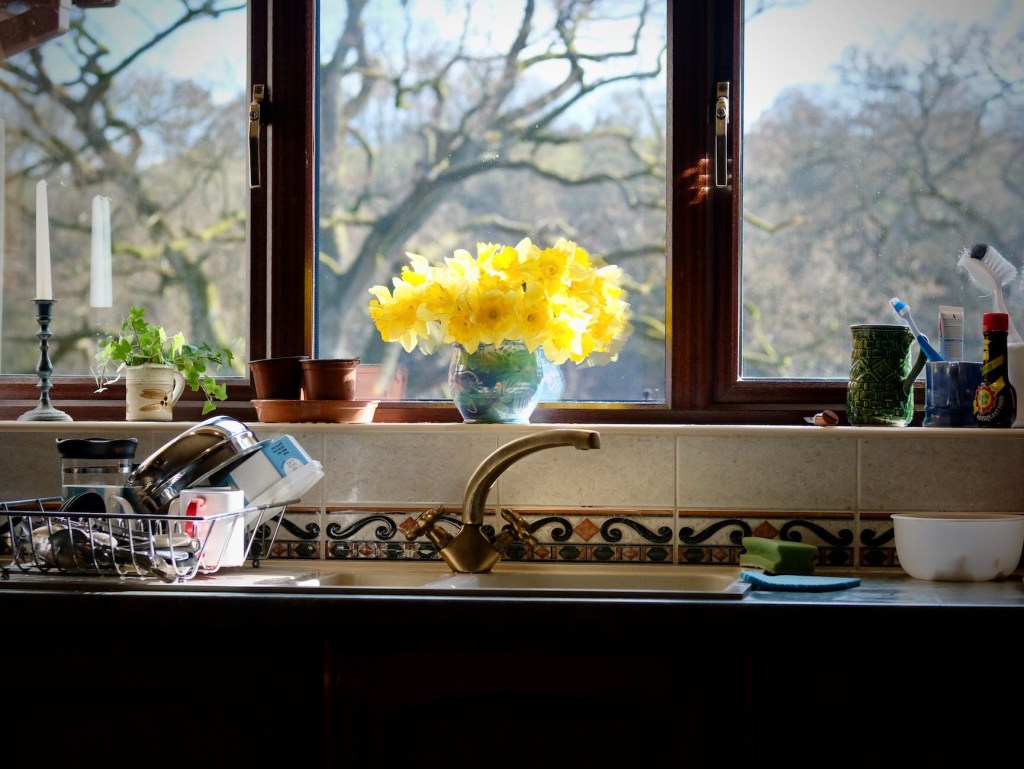
5. Organize the dishes beside the sink, and keep the sink empty.
Whether you use a soaking or a rinsing method, the dishes look so much nicer and “feel” more manageable for later when they are neatly organized on the counter. In addition, the sink stays clear and functional for other uses during Shabbat. Not only can you stack like item with like item (such as plates with plates), you can also layer smaller dishes into larger ones for a more compact and minimized look. A large pot may hold all your bowls or all your cups, for example, providing more space on the counter and keeping things looking tidy and less like a “pile up.”
6. Fill the bottoms of cups with water.
Grape juice and wine are delightful traditions for Shabbat, but not necessarily a joy to clean after sitting a day or so. Give each cup a drop of soap and fill just to cover the ring of remnant juice. Or, fill the whole cup with soapy water, in the case of liquids like smoothies which leave more residue.
7. Use the same cup the whole day of Shabbat.
Give each family member their own cup for the day, and leave a loving note in the cup cabinet that reminds your family to reuse their glass instead of grabbing another one. With the exception of a “fancy” glass for Erev Shabbat dinner, our family uses and reuses our water bottles on Shabbat. After Shabbat, I only need wash the cups of guests (who have also willingly abided by the “one cup” standard).

8. Make ahead your Shabbat meals.
In doing so, you give yourself opportunity to wash any prep dishes before Shabbat begins and to minimize what you dirty up on Shabbat itself, thereby reducing the peace-stealing magnitude of “dirty dish sea” and the after Shabbat clean up.
9. Make one pot meals.
While you’re making your meals ahead, let’s do some math. Let’s say you prepare three main meals plus one snack or dessert for Shabbat. If each of these meals is a one pot meal, you have only four pots or pans to wash after the fact. But! If you use two to three pots and pans for the main meals, plus one for the snack or dessert, you’re looking at seven to ten pots and pans (or uses of them) instead! That’s a lot of washin’. I’ll pass.
10. Use easy to clean pots and pans.
If you’ve ever had food stick to its cookware, you understand the struggle— especially if you need to wait a day before washing it. My go-tos for easy to clean cookware are cast iron and stainless steel. Hot water after Shabbat seems to do the job just fine. (And if you don’t own naturally “non-stick” type cookware, be generous when “greasing” your pots and pans with healthy, Biblically clean fats before use to minimize sticking.)

11. Use glass storage containers.
If you find yourself in a position of needing to store food away for Shabbat, I suggest using glass containers, such as glass storage containers or casserole dishes that come with a lid. You can cook ahead your meal, store it, serve it, and reheat it— all in the same glass container.
12. Alternate the type of dishes needed for each meal.
If you keep a minimal kitchen as I do, planning meals that all require the same type of dishware means I will have to wash after each meal. Although this tip does not reduce the number of dishes you’re using on Shabbat, it does reduce how much dish washing is necessary on Shabbat. I like to plan one meal with a “creative dish” (more on that in a later tip), one with a plate, and one with a bowl, thereby maximizing my rest. If you do need the dishes you just ate on for later Shabbat use, see the next tip.
13. Have each capable family member immediately wash his or her own plate after eating.
Sometimes, you need to use the same dishware, silverware, or cutlery twice in a day— even with prepping ahead. But that doesn’t mean you as the homemaker need to spend 30 minutes at the kitchen sink three times a day. Let each person do their part, but make sure it’s done immediately after eating for easiest cleaning.
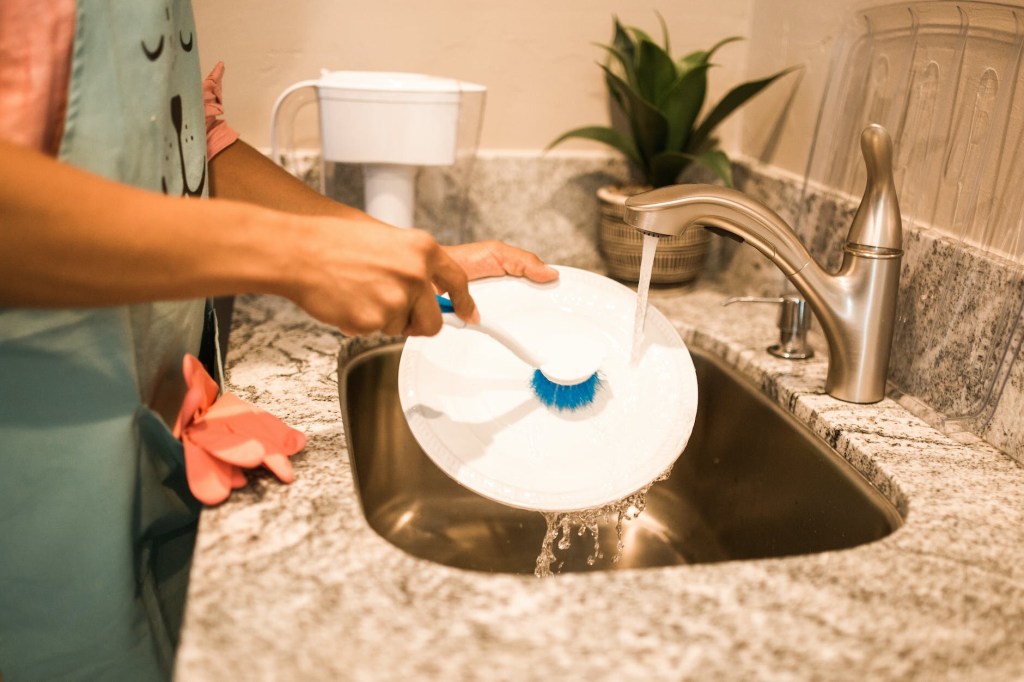
14. Get creative with the type of “dishes” you use.
What can hold food? Not just plates and bowls! But toast can hold eggs. Tortillas can hold breakfast tacos. Cloth or paper napkins can serve as the “plate” for muffins and sandwiches. A large cutting board set in the center of the table can be used for finger foods chosen right off the board by family members. A carved pumpkin or watermelon can hold fruits, soups, rolls, and the like. Ever heard of a “bread bowl?” That works, too! And the clean up is so wonderfully easy.
15. Use disposable dishes.
Yes, I said it. You can use disposable dishes. You also get to decide when and how often its necessary. Perhaps you’ll only use disposables when guests are coming, or perhaps you’ll use them every Shabbat. YHVH’s burden is light; it’s our ideals and expectations which sometimes cause us undue stress. Don’t let the dishes prevent Shabbat peace in your heart and home.
I hope you found these tips for managing Shabbat dishes helpful! Have a peaceful Shabbat, friends!
Shalom,
Raquel
 Women Living Torah
I like how you keep reminding us to prepare to rest FROM our regular tasks and income producing tasks and the practical ways you do that. The best reminder is to rest With the Creator of the Universe. For me disposable paper plates and silverware and flowers to match the plates is what I do. Also Dawn has a power wash spray that you can use which makes cleanup a breeze if you have sitting pots and pans in the sink after the sabbath.
LikeLike
Thank you so much for sharing, sister!!
LikeLike
Good Evening Raquel, This was done very well, thank you, I’m a household of two, or 7 depending, I neatly stack my dishes on the counter, I usually have everything done Friday pre evening, including Heat up meals, I look forward to reading more of your Blog and watching more of your videos, Thank You and YAH bless you and yours
LikeLike
Thank you for sharing, sister!! Many blessings to you!!
LikeLike