
The Proverbs 31 woman was a prepared woman.
She saw the snow ahead and the times to come, and she made herself and her house ready. She increased in knowledge and skills, created systems, and put in good, old fashioned hard work to see to the provisions of not only herself but her whole household. Her family, her servants, and even the poor and needy, received preparations from her filled hands (vs. 15, 20-21).
As a result of her preparedness, “she is not afraid of the snow for her household,” and “she laughs at the time to come” (vs. 21, 25). The Proverbs 31 woman did not fear the future, sudden calamity, poverty, or want.
Preparedness as Proverbs 31 women is wise, but how does one begin? Or even how does one continue? How are we to apply preparedness to our different situations and particular needs?
The foremost wisdom we learn from the Proverbs 31 woman is that she feared YHVH (vs. 30). She prayerfully submitted herself to YHVH’s ways and followed the directions, promptings and opportunities He placed in her life to guide her preparedness.
As we seek to live a more prepared lifestyle, we can ask the Most High to order our footsteps. We can ask Him to place us on a path of learning and in the path of those from whom we can learn.
We can search the Scriptures for wisdom on how to prepare our households. The Scriptures have much to say on preparedness, and we can study the examples of those who prepared in Scripture, such as Noah, Joseph, and our favorite gal— the Proverbs 31 woman.
And lest we think we walk this path alone, we can heed Godly counsel, the counsel of the aged, and the counsel of history. YHVH made us to dwell in community; many people have walked this path before us, and many people are seeking it out now, just as we are. If we have the humility to listen, there are those to kindly share and teach what they’ve learned and know.
With the fear of YHVH being our foundation, we can then, just as the Proverbs 31 woman, act in obedience. As we receive clarity and direction in our preparedness journey, we apply ourselves willingly to the tasks before us.
And to what did the Proverbs 31 woman apply herself? What is written of her emphasizes 5 specific areas of preparedness in which she cultivated skill and placed her focus.
We can glean insight into preparedness by how she lived a prepared, more sustainable lifestyle.
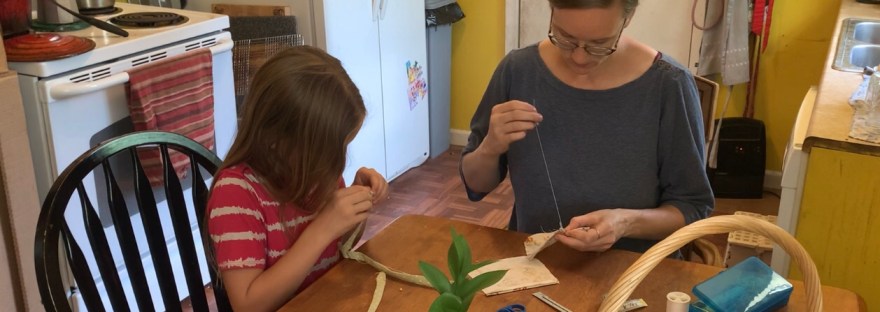
1. She was skilled in needlework.
The Proverbs 31 woman knew how to sew, y’all. The Scriptures tell us she sought wool and flax, spun wool and linen, made carpets, fine linen, and sashes, provided winter garments for all her household, and wore quality clothing of fine linen and purple herself (vs. 13, 19, 21, 22, 24). And can we appreciate the fact that she sewed all this before the sewing machine was invented (with help I’m sure, but it can be done!)? Think of all the material you use in your home— from clothing to napkins to shoes to diapers. Needlecraft is a tremendously important preparedness skill.
2. She gathered in food.
Anyone else ever think the Proverbs 31 woman grew all her own food? Well, just like I, you’d be wrong.
The first mention of the Proverbs 31 woman gathering in food is actually food brought from “afar” (vs. 14). Also notice that she is likened to a merchant fleet bringing in her food. How much food do you think a fleet of merchant ships can hold? A lot. The Proverbs 31 woman had stores of food provisions, enough for her family and her maidens (vs. 15), likely for long periods of time.
In addition to bringing in her food from other sources, the Proverbs 31 woman did garden (at least grapes). The Scriptures tell us she bought a field and planted a vineyard by her own labors (vs. 16).
Her preparedness didn’t stop with stores of food and gardening, however. After gathering in all these large quantities of food, it must be kept properly for long term storage. Our Proverbs 31 woman gathered in her food, and she preserved her food.
Sourcing, growing, harvesting, preserving, cooking— the area of food preparedness is multi-faceted and incredibly fun to be always learning and growing in!
3. She gave attention to her health and physical needs.
Although we don’t see the Proverbs 31 woman gathering herbs and making salves, the Scriptures say she “armed her waist with strength, and made her arms strong” (vs. 17). She clothed herself in fine linen and purple— not the cheapest, lowest quality sweats she could find to barely meet her needs, but high quality and stylish garments— and presented herself with strength and dignity (vs. 22, 25). The Proverbs 31 woman knew she had a good work to do, and so she must be strong and well and treat herself and her body with respect.
Consider it the preparedness that enables other areas of preparedness. We can ask ourselves, “What can I do now to steward my health wisely?” And “What knowledge, skills, and supplies do I need in order to prepare for potential issues with mine or my family’s wellness?”
4. She pursued financial freedom.
The Proverbs 31 woman managed a profitable business selling fine linen and sashes (vs. 18, 24). She made calculated investments (vs. 16), and by her industry in the home (vs. 27) and the frugality of her various domestic undertakings, she built the home economy.
The picture of the Proverbs 31 woman is a woman who practiced faithful financial stewardship, did what she could to have financial independence, and was unfettered by debt, paycheck to paycheck living, or reliance on employment by someone else.
Financial disaster can be just as troubling as any physical disaster in and of itself, but being personally financially unprepared in addition to wide spread troubling times (physical disasters, economic downturns and depressions, shortages and inflation) makes an unpleasant situation even worse and more difficult to navigate.
5. She was in good standing with her community.
The Proverbs 31 woman was known for her strength and dignity, wisdom, kindness, and goodness (vs. 12, 25, 26). Her husband was respected in the city, which implies her own respectability (vs. 23). She was too busy doing good to her husband, working willingly with her hands, reaching out her hands to the needy, and looking well to the ways of her household to be a busybody of low repute in her community (vs. 12-13, 20, 27).
Especially in times of trouble, when one’s own preparations aren’t sufficient in and of themselves, the community needs one another, and the Proverbs 31 woman’s good reputation marked her as a woman with whom others could trust and work.
Although she lived at a different time, I find the Proverbs 31 woman’s example of preparedness is still relevant and instructive in my modern preparedness journey, giving me consideration for areas I need to grow in as a prepared woman.
I also find her example incredibly encouraging because the Proverbs 31 woman didn’t begin knowing how to do everything for which she is praised at the end of the passage (vs. 31).
She increased in learning over time. She grew in skills. She had to figure things out, and she built on what she was learning from year to year. We can do the same!
If we don’t know how to sew, we can learn. If we don’t know how to preserve food, we can learn. If our finances are keeping us from living our homestead dream, we can take steps toward financial freedom.
Whatever YHVH is placing before us to do in our preparedness journeys, we can trust that He will also equip us with the ability to do it.
Happy prepping, ladies!
Shalom!
Raquel
 Women Living Torah
Raquel, A few years ago, you wrote out a helpful guide of Chag, appointed times, feasts. I think I saw it on YT. Would you still have that available for newbies in our home group?
LikeLike