
The content in this article is for informational and entertainment purposes only and is not intended to provide medical diagnosis, advice, or treatment, nor to be used as a substitute for consultations with your healthcare providers.
When we think of providing our families with wholesome, nutritious foods, usually, the grains, fruits, and vegetables command our attention. But there’s a discreet player in cooking that is absolutely vital to our health.
We need them for hormonal balance, energy, to feel full and satisfied after eating (something YHVH wants for us! Deuteronomy 8:10), and even to absorb many of the nutrients in the grains, fruits, and vegetables we have so intentionally prepared for our families. 1
Without them or when used improperly, they can have devastating effects on our health, such as leading to depression, mineral deficiencies, increased cancer and heart disease, and organ damage. 2
We’re talking about fats!
Since the introduction of the industrialized diet (marked by processed, refined foods), an attempt has been made to demonize fats created by the Most High for our consumption.
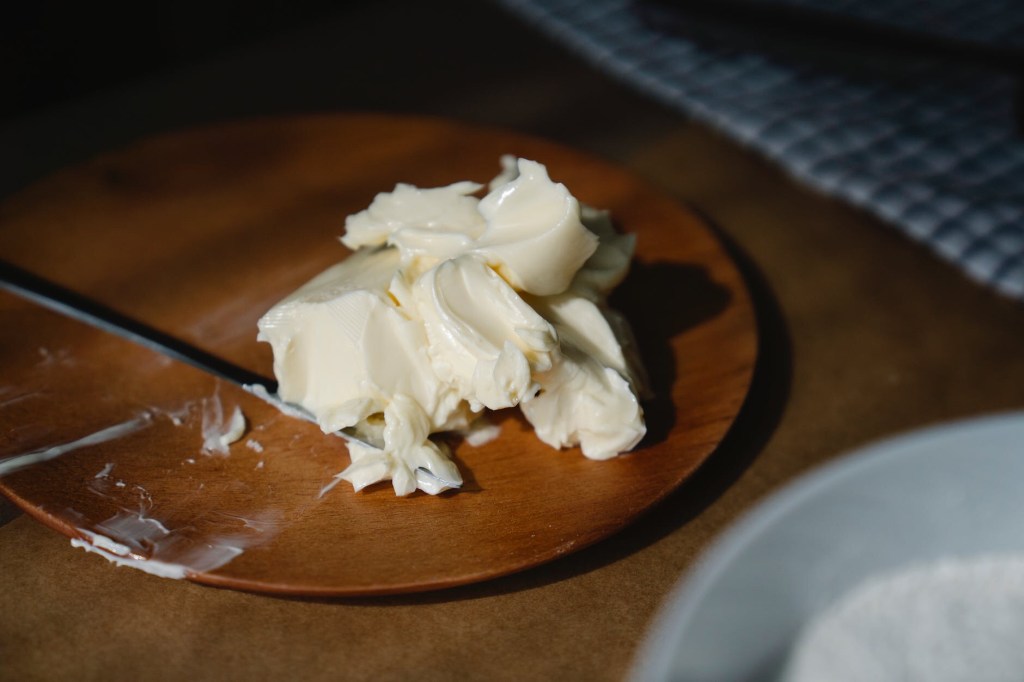
These natural, healthy fats are easily identified as fats in their natural states and extracted through straightforward processes, like butter which comes from churning the cultured cream of milk and tallow which is melted and filtered fat trimmings of ruminant animals.
The majority of what lines the “fats and oils wall” at the grocery store are unnatural and even dangerous substances, like shortening and canola oils, that are not inherently conducive to oil production and must go through extreme extraction processes (high temperatures and toxic solvents, hydrogenation, and homogenization) in order to give the facade of a fat for one’s consumption. In fact, it is these same complicated extraction processes which can weaponize an otherwise wholesome and nutritious food against our health. 3

Look to the ancient paths, the traditional fats and the wisdom of their use, that have sustained generations of families!
Consider YHVH’s Instructions
Not all traditional cultures follow YHVH’s instructions for what is food, however, so when considering animal fats, always refer back to what animals YHVH calls clean in Leviticus 11 and Deuteronomy 14.
YHVH also provides specific instructions for the fat of oxen, sheep, and goats.
In Leviticus, we read that fat is an integral component of offerings to YHVH, specifically all the fat that covers the inward organs is to be burnt on the altar and not eaten (Leviticus 3:14-17). I understand the commandment to go one step further in Leviticus 7:22-25, in that this restriction on eating inward fat is not just for sacrificed animals.
We are not to eat the inward fat of the types of animals that could be sacrificed, that is oxen, sheep, and goats, or otherwise Biblically clean animals that have died of themselves or have been torn by beasts.
The Scriptures state that the inward fat of oxen, sheep, and goats, known as suet, may be used for any other purpose— such as soaps, salves, and candle making— but may not be eaten.
The inward fat of a sacrificed animal is not eaten, nor can it be used for other purposes, because it is burnt on the altar; neither is the inward fat of any oxen, sheep, or goat to be eaten, but their suet may be used for other purposes.
When learning about traditional fats, and choosing which Biblically clean fats to use in your home, consider first YHVH’s instructions, and then how the fat was extracted (especially vegetable oils) and its proper use (to heat or not to heat?).
Here are the 5 Biblically clean, traditional fats I most commonly use in my home, and how I use them.
1. Butter
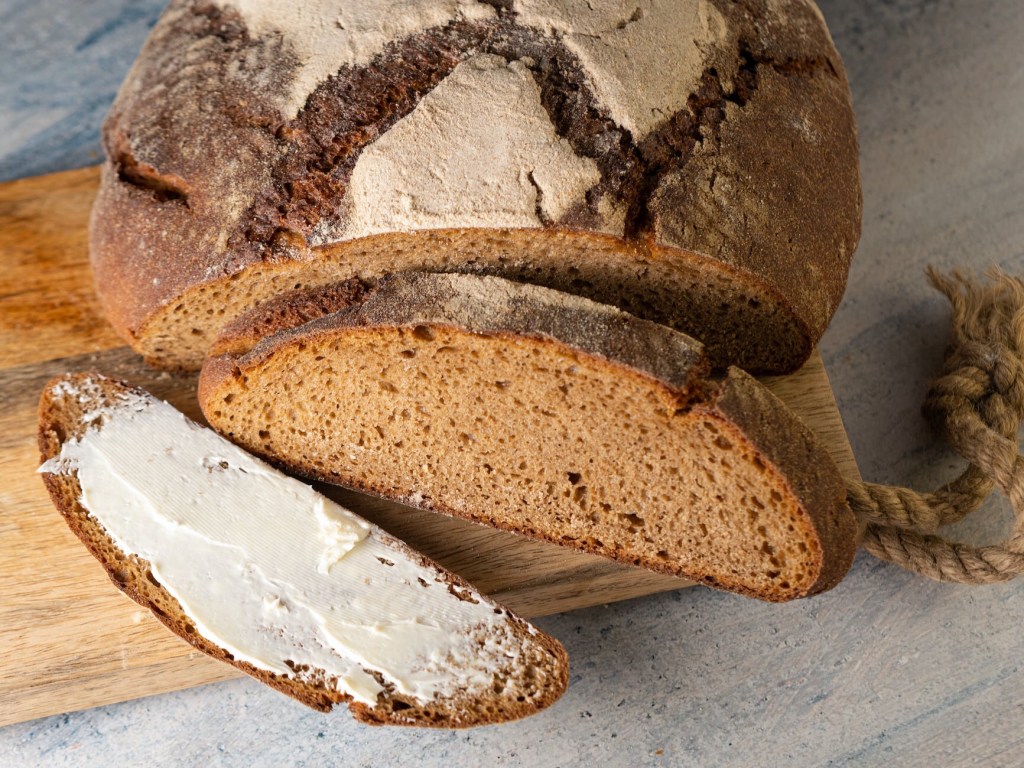
Nothing beats a bit of butter! Or a lot a bit of it. Butter can be used liberally in a variety of contexts, slathered on a warm slice of sourdough bread, roasted on top of vegetables, fried with eggs, or baked into cookies. Butter is one of the safest and healthiest fats to use, but I also jokingly say that in eating butter, I am following in my Messiah’s footsteps. After all, it is prophesied of Yeshua, “Butter and honey shall He eat” (Isaiah 7:15). Amen!
You can easily make your own butter! After leaving the cream of raw milk on the counter overnight, I use my hand blender to churn the cream until it separates into a solid (butter) and liquid (buttermilk). Then, I pour off the buttermilk and add as much water as the buttermilk I poured off. I churn the butter with the water to “wash and work” the butter (to cleanse it of any additional buttermilk). Pour off the water to add fresh water, and again churn the butter. Repeat the “washing and working” process until the water you pour off is mostly clear.
Optionally, you may choose to clarify your butter to make ghee, which is shelf stable, has a higher smoking point, and is easier for those with dairy sensitivities to handle. Melt the butter on the stovetop over low heat. As the melted butter simmers, use a spoon to skim foam that forms on the top. After 20 minutes, cooking over low, allow the ghee to cool for about 5 minutes. Then, strain the ghee through a cheesecloth, coffee filter, or other such fine filter. Store in a glass jar.

2. Schmaltz
Poultry fat, primarily from the skin of chickens, ducks, and geese, is called schmaltz and is considered a gourmet cooking fat in French and Jewish cuisines. The quality and nutrient profile of the schmaltz does depend on what the poultry was eating, or being fed, but overall, schmaltz is a stable fat that can be used at high temperatures.
I have not personally rendered or used goose fat (yet!), but I enjoy using the chicken and duck fat of poultry raised and processed on our farm for frying, roasting, and sautéing vegetables, particularly potatoes. I will also use these fats as the base of my roux for gravies and sauces.
The process I choose to use for rendering schmaltz is very simple and passive, although more active, intentional schmaltz rendering can be done for larger batches (see the section on tallow). When I make and cool chicken broth, usually a layer of solid fat rises to the top; this solid fat layer is the schmaltz. I either leave the schmaltz to be added with the broth for soups, or I scoop it off for other uses.
Gathering duck fat is even easier. When I roast a whole duck, I first score its skin and then place the duck on a broiler pan, which is a slotted upper pan with a lower pan that can catch drippings. When I am finished roasting the duck, I pour the fat drippings in the lower pan into a glass jar and store in a cool place. I use a refrigerator, but traditionally, one might use a root cellar. The ducks we raise give us one half-pint of fat each.
3. Tallow
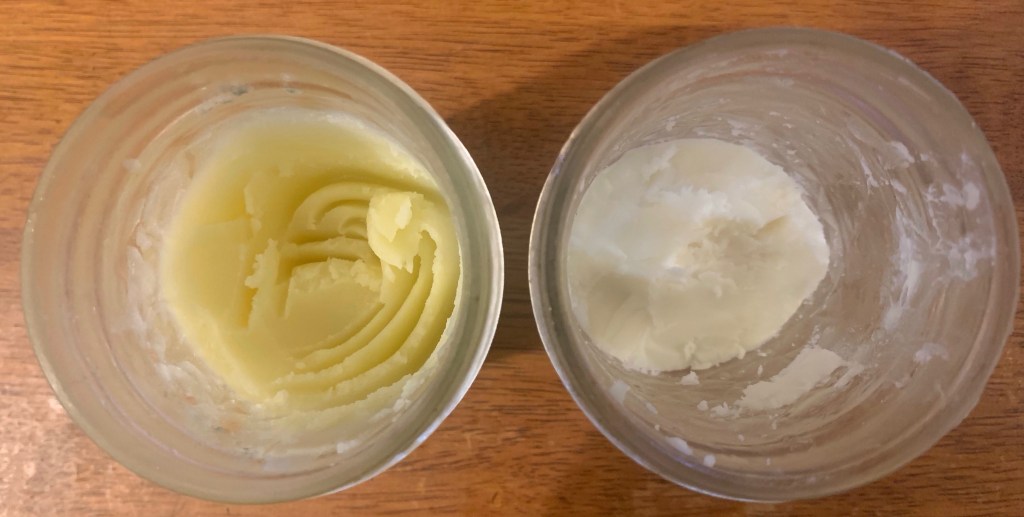
Made from the fat of ruminants, such as cows, sheep, and goats, tallow is not only the Biblically clean alternative to lard (pork fat), but outshines lard in both nutrient profile and its diverse uses. Any recipes that call for lard can be substituted with tallow, such as biscuits and pastries. Tallow is also excellent for cooking or frying, as it is stable even at very high temperatures.
The consistency of tallow is hard and solid when kept cold, but softens and becomes liquid with warmer temperatures. In addition, it has antimicrobial properties. These qualities make it an excellent choice for skincare products, such as soaps, balms, and salves. I also season my cast iron cookware with tallow. Because I cannot usually verify boughten tallow is Biblically clean, (that is, not made from inward fat), I only use the tallow I personally produce for eating purposes.
I render tallow a couple of ways. The first is quite passive using ground beef. (Do take care to purchase only ground beef you know is not mixed with suet, inward fat. The butcher from whom you source your beef will know. Usually, “100% ground chuck” is fine, while “100% ground beef” is potentially mixed with suet.) After frying meat patties or browning ground beef, I simply pour the beef fat in the pan through a filter and store in a glass jar in the refrigerator.
Because I have heated the fat at high temperatures and am not taking the beef through a more intentional rendering process, the tallow definitely has a more “beefy” smell and taste to it, which I find is complementary to many dishes but is perhaps not preferable for soaps or candles.

My second way of rendering tallow is done when processing sheep raised on our farm. The process of rendering tallow for eating purposes and non-eating purposes is exactly the same; the difference is from where I obtain the fat. Fat for non-eating purposes can come from the inward organs.
To collect fat for eating purposes, as I package cuts of meat, I trim excess fat, being careful to avoid including meat with my fat as much as possible. Then, I set these fat trimmings aside in the refrigerator until I am ready to render the fat. To render the fat, I first chop the fat into smaller portions. Then, I melt it over very low heat, watching to ensure it is not burning (which will give it a stronger odor and taste) and giving it an occasional stir. When the fat has completely melted, which can take all day, depending on how much fat you are rendering, you will see that little bits have floated to the top (impurities), while a clear liquid is at the bottom (the tallow!). This is the sign to strain the tallow of all those little bits through a fine cheesecloth or filter. The tallow is now ready for use!
4. Coconut Oil
Because we do not yet produce all our fats through the animals we raise, my boughten cooking fat of choice is coconut oil, which can be easily attained at most mainstream marketplaces. Coconut oil is primarily saturated fat, making it very stable even at high temperatures. Therefore, I use it in all cooking and baking contexts, although it does take some experimentation in baked goods.
Coconut oil is rock hard when cold, which is practically impossible to roll out in pastries, but it liquifies at warmer temperatures which can change the texture of your baked goods. Using it often is the key to understanding it better. Coconut oil is also antimicrobial and is popular for topical skincare, but I find that my family’s skin does not react well to it; I only use coconut oil for culinary purposes.

5. Olive Oil
The gem of vegetable oils and full of antioxidants! I primarily use olive oil for homemade salad dressings and dipping oils for bread, marinating meat, coating bread dough as it rises to keep it moist, low to moderate temperature cooking, specifically in baked goods that call for liquid oil, and as my skin care oil of choice, using it as a topical pain reliever and in salves. Olive oil can impart a certain olive oil flavor that is emphasized in things like homemade mayonnaise, but is either minimal in most uses or a taste quickly acquired.
Butter, schmaltz, tallow, coconut oil, and olive oil are the 5 traditional, Biblically clean fats I most commonly use in my home and kitchen, but there are other fats that can be properly used with healthful results.
For more information, I suggest looking into the recommendations by the Weston A. Price Foundation, which has researched the traditional fats of cultures around the world and their pre-industrialized diets.
Use discernment, however, and always refer back to YHVH’s instructions on fats and foods in the Scriptures.
Shalom!
Raquel
Comment below! Do you use traditional fats? Which are your favorites, and for what purposes?
1 Fallon, Sally. “Fats.” Nourishing Traditions, New Trends Publishing Incorporated, 1999, pp. 4.
2 Fallon, Sally. “Fats.” Nourishing Traditions, New Trends Publishing Incorporated, 1999, pp. 4-10.
3 Fallon, Sally. “Fats.” Nourishing Traditions, New Trends Publishing Incorporated, 1999, pp. 13-15.
 Women Living Torah